
Renting vs Buying a Home in Greenville SC: Which Is Better for You? 🏡
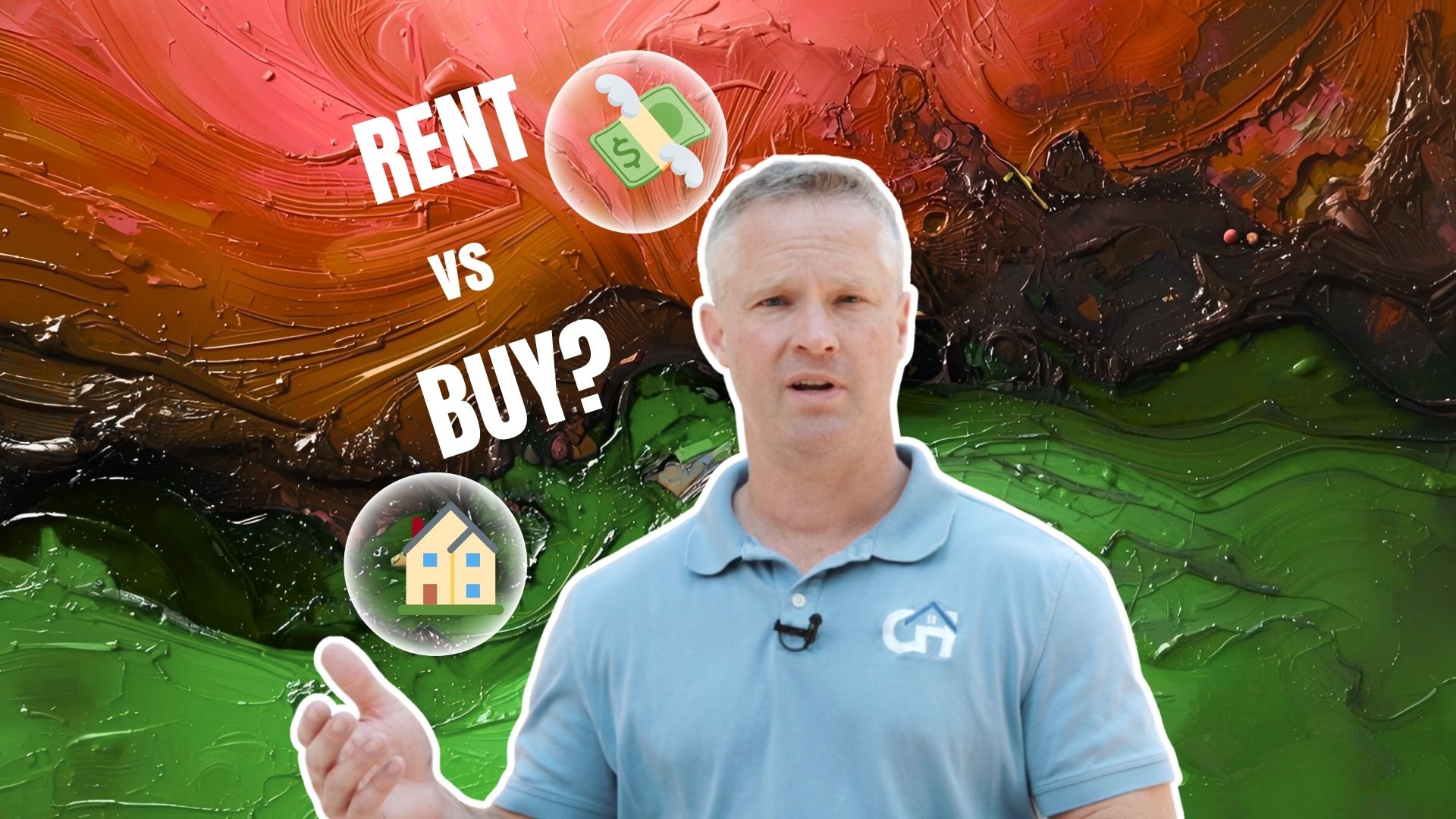
Renting vs buying a home comes down to three things: how long you plan to stay, how much cash you have saved, and what owning really costs where you live. If you’ll be in the Greenville area for several years and can handle the upfront costs, buying usually wins because your payment builds equity. If you might move soon or your savings are thin, renting can be the smarter call for now.
Renting feels easier, and sometimes it is. But every rent check is like paying 100% interest: the money is gone, and none of it comes back to you. Let’s look at the real numbers.
Quick note: I’m a Realtor, not a lender. Loan rules, fees, and rates change, so talk to a licensed loan officer about your own numbers before you make a decision.
💰 What does renting really cost over five years?
More than most people add up. At $2,500 a month, rent is $30,000 a year and $150,000 over five years. At Greenville County’s median rent of $1,262, it’s still about $75,700 over five years. That money buys you a place to live, but it doesn’t buy you any ownership.
The Census Bureau’s 2020–2024 American Community Survey puts Greenville County’s median gross rent at $1,262 a month. The median monthly cost for owners with a mortgage was $1,561. Those are countywide medians from a five-year survey, not a quote for any one house, but they show the gap between renting and owning is smaller than many people assume.
To be fair to renting: your landlord pays for the new roof and the broken water heater. That has value. It just doesn’t build wealth.
📈 How does buying a home build long-term wealth?
Two ways. Every mortgage payment pays down some principal, which is money you keep as equity. And if the home’s value rises over time, that gain is yours too. Values don’t only go up, as 2008 showed, so think in years, not months.
Principal paydown is the part people overlook. It’s forced savings. You don’t have to remember to move money into an account; the payment does it for you. Early in a 30-year loan most of the payment goes to interest, but the principal share grows every year.
There’s also inflation. With a fixed-rate mortgage, your principal and interest payment stays the same for the life of the loan, while rents can go up at every lease renewal. I dig into that idea more in average mortgage lifespan in America, and you can see how buyers handled very different rate eras in the history of mortgage rates.
🧮 What costs do buyers forget about?
The mortgage payment is only part of it. Owners also pay property taxes, homeowners insurance, maintenance, and possibly HOA dues and mortgage insurance. Then there are closing costs and the down payment up front. Budget for all of it before you compare a mortgage to your rent.
- 🏛️ Property taxes: South Carolina assesses a primary residence at 4% of fair market value, compared with 6% for a second home. You have to apply with the county assessor to get the 4% rate.
- 🛡️ Homeowners insurance and, in some spots, flood insurance
- 🔧 Maintenance: HVAC, roof, water heater, yard
- 📄 Mortgage insurance if you put down less than 20%. See what PMI is and how to remove it.
- 💵 Closing costs and down payment
I keep a longer list in the hidden costs of living in Greenville SC. Read it before you set your price range.
🤔 When does renting make more sense than buying?
Renting makes sense if you might move within a couple of years, your job isn’t settled, or buying would drain your emergency savings. It’s also smart if you’re new to the Upstate and still learning which part of town fits you. Buying is a long-term move. Don’t force it.
Closing costs on both ends of a sale eat into equity. If you buy and sell quickly, you may lose money even if the home’s value held steady. A year of renting while you learn the area is not wasted money if it keeps you from buying in the wrong spot.
New to the area? My guide to where to live in Greenville can shorten that learning curve.
📊 Do interest rates change the renting vs buying a home math?
Yes, rates change the monthly payment, so they matter. But they’re one input, not the whole answer. Freddie Mac’s weekly survey had the 30-year fixed average at 7.28% on October 1, 2026. A higher rate means a higher payment on the same loan amount, which can tip the math toward renting for some households.
Ask a lender to run your real numbers at today’s rate: payment, taxes, insurance, and mortgage insurance. Then compare that to your rent, not to a payment you saw online. If rates come down after you buy, refinancing may be an option, but plan as if your rate is the one you’ll keep. My post on pre-approval vs pre-qualification explains how to get those numbers in writing.
✅ Chris’s Take: Stop Paying 100% Interest When You’re Ready
I was born and raised in Greenville, left, and came back. I served as a Greenville County Sheriff’s Deputy and later as a Spartanburg County Lake Warden. I’ve seen this area grow a lot, and I’ve watched plenty of renters wish they had bought a few years earlier.
Renting has its place if you need flexibility. But if your goal is long-term stability and building wealth, owning is usually the better path once you’re ready. With the right lender, the right budget, and a plan for how long you’ll stay, you can stop paying 100% interest to a landlord and start building something of your own.
❓ Frequently Asked Questions
Is it cheaper to rent or buy in Greenville SC?
It depends on the home and your down payment. Census survey data for 2020–2024 shows Greenville County’s median gross rent at $1,262 a month and median owner costs with a mortgage at $1,561. Run your own numbers with a lender.
Why do people say rent is 100% interest?
Because none of your rent payment comes back to you as ownership. With a mortgage, part of each payment goes to principal, which becomes equity you keep when you sell or pay off the loan.
How long should I plan to stay to make buying worth it?
There’s no fixed number, but buying and selling both come with closing costs. If you might move within a couple of years, renting is often safer. The longer you stay, the more time equity has to build.
What upfront costs do I need to buy a house?
Plan for a down payment, closing costs, and cash reserves. Down payments can range from 0% on VA and USDA loans to 3% to 3.5% on some conventional and FHA loans, up to 20% to avoid PMI.
Does South Carolina tax my home less if I live in it?
Yes. South Carolina assesses an owner-occupied primary residence at 4% of fair market value instead of 6%, but you have to apply with your county assessor to get it.
🔗 Stay Connected With Me
Don’t just read about the Upstate—see it, live it, and explore it with me across social media!
📞 Call/Text me at 864-351-8239
👉 Like & Follow for more: