

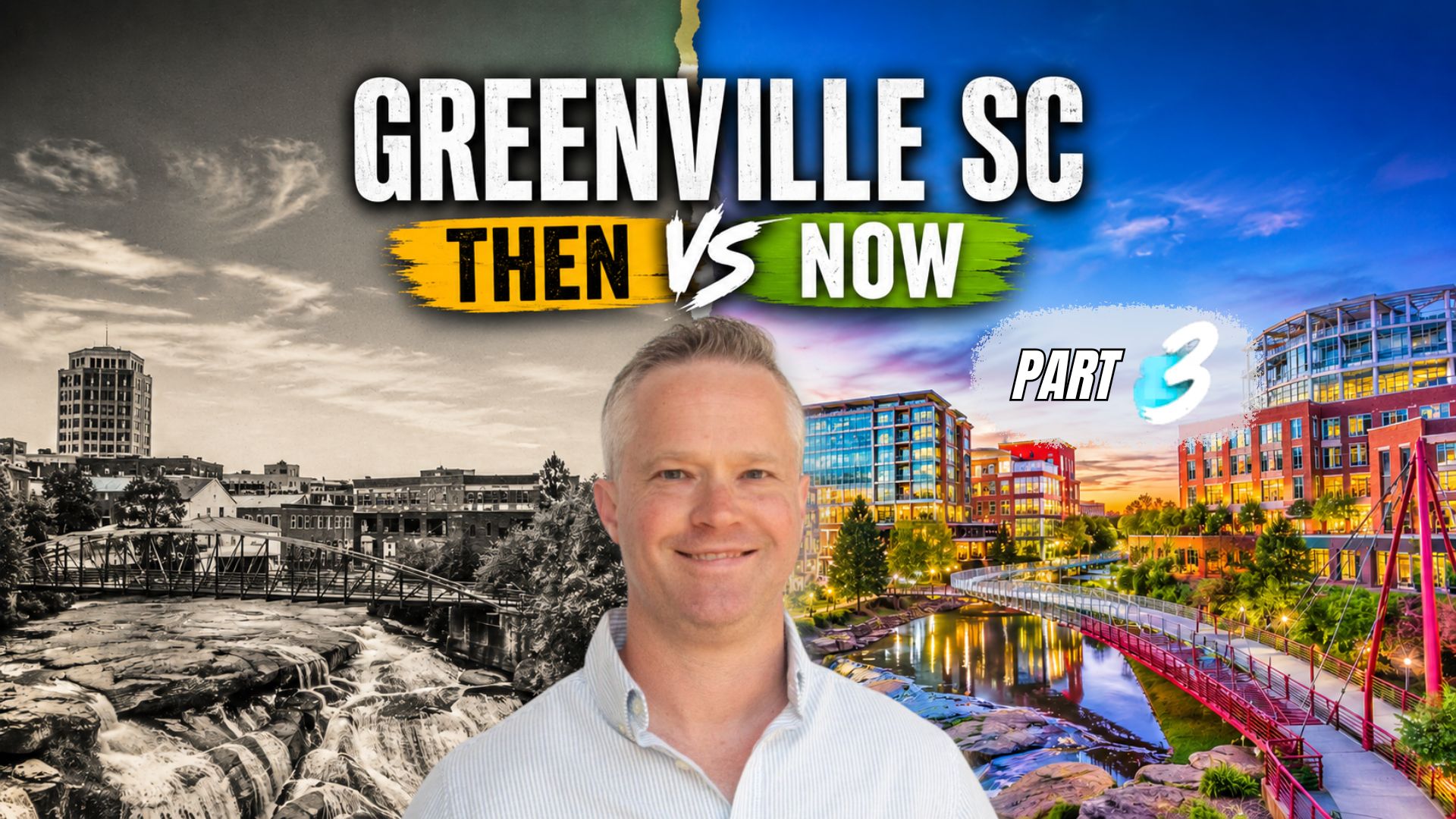
🏡 Moving to Greenville County SC? Choose the Right Version of Greenville
Moving to Greenville County SC is not just about finding a house, it is about finding the version of Greenville that actually fits your lifestyle. Greenville County reached an estimated 583,125 residents in 2025, up 11% from the 2020 population base, according to U.S. Census Bureau QuickFacts. (census.gov)
That kind of growth changes everything. Roads that used to feel quiet now have turn lanes, traffic lights, grocery stores, school zones, and subdivisions. New homes bring opportunity, but they also bring pressure.
I’m Chris Horrell, a native-born local Greenville real estate agent, and I have watched this county change road by road, neighborhood by neighborhood, and rooftop by rooftop. If you are thinking about moving here, the better question is not just, “Is Greenville a good place to live?” The better question is, “Which version of Greenville County fits how I actually want to live?”
🌱 Why Has Greenville County Changed So Much Since 2000?
Greenville County has changed so much since 2000 because population growth, job expansion, housing demand, schools, roads, sewer access, and shopping have all pushed development outward. The rooftops did not show up by accident. They followed demand.
According to U.S. Census Bureau QuickFacts, Greenville County had 451,225 residents in 2010, 525,534 residents in 2020, and an estimated 583,125 residents in 2025. That means the county added more than 57,000 estimated residents from 2020 to 2025 alone. (census.gov)
If you grew up here, you can feel that change. Maybe you remember when certain roads were two lanes and quiet. Maybe you remember when fields sat where subdivisions now stand. Maybe you remember when “far out” actually felt far out.
That is the part people moving here may not immediately understand. Greenville did not just grow. In many places, it changed identity.
The key takeaway: Greenville County’s growth is not random. It has followed access, affordability, infrastructure, jobs, schools, and lifestyle.
🏘️ What Do the New Rooftops Mean for Greenville County Buyers?
The new rooftops mean buyers now have more choices, but also more complicated decisions. Greenville County is no longer one simple housing market. It is a collection of smaller lifestyle markets sitting under one county name.
According to the U.S. Census Bureau, Greenville County had 253,152 housing units in 2025 and 4,947 building permits in 2025. That helps explain why buyers see so many different options, from new construction and townhomes to older homes, infill properties, acreage, and master-planned neighborhoods. (census.gov)
Years ago, a buyer may have started with a budget, a side of town, and maybe a school zone. Today, the search is more layered.
You may be choosing between:
- Downtown convenience
- Suburban neighborhood amenities
- New construction
- Trail-connected living
- Larger lots
- Acreage
- Shorter commutes
- School assignment conversations
- Proximity to GSP, I-85, or major employers
- Lower-maintenance townhome living
That sounds exciting, right? It is. But it is also where buyers get overwhelmed.
Two homes can look similar online, but the daily life around them can feel completely different. That is why moving to Greenville County SC requires more than scrolling listings. You need to understand what life feels like once you leave the driveway.
🧭 Why Is Greenville County Really a Collection of Micro-Markets?
Greenville County is a collection of micro-markets because downtown, Greer, Mauldin, Simpsonville, Fountain Inn, Travelers Rest, Taylors, the Pelham corridor, Augusta Road, and more rural edges of the county can all offer different daily routines. A 15 or 20 minute difference can completely change your commute, shopping patterns, school conversation, and lifestyle.
VisitGreenvilleSC describes the Greater Greenville area as “a region of distinct sections,” each with its own character, offerings, charm, and flavor. That is not just tourism language. It is also true in real estate. (visitgreenvillesc.com)
Someone saying “I want to move to Greenville” may mean:
- A walkable downtown condo
- A historic home with character
- A newer home in a subdivision
- A townhome close to shopping
- A larger home in the suburbs
- A trail-connected lifestyle near the Swamp Rabbit Trail
- A home close to the airport
- A quieter setting farther out
Those are not the same search.
And that is why the phrase “moving to Greenville” is too broad. The better question is, “Which Greenville lifestyle are you actually trying to live?”
🚗 How Should Relocating Buyers Compare Greenville County Lifestyles?
Relocating buyers should compare Greenville County lifestyles by looking at commute, schools, home style, road patterns, shopping, outdoor access, neighborhood feel, and future growth around the area. The house matters, but the daily routine matters just as much.
Greenville County’s long-range planning documents use a “Communities, Centers, and Corridors” growth strategy to guide future development, infrastructure, transportation alternatives, and land use decisions. That matters because growth often follows corridors, commercial centers, and infrastructure. (greenvillecounty.org)
Before you fall in love with a floor plan, ask yourself:
- Where will I drive every day?
- Do I want sidewalks, amenities, and neighborhood pools?
- Do I want privacy, land, or fewer restrictions?
- Do I want to be close to downtown restaurants?
- Do I want newer construction or an older home with character?
- Do I want trail access?
- How important is airport access?
- Am I comfortable with nearby development still happening?
Most buyers start with the house. I like to start with the life.
Because here is the truth. You can buy a beautiful home in the wrong location for your routine. And once you do, the floor plan will not fix the commute, the traffic pattern, or the lifestyle mismatch.
🏗️ Where Does New Construction Fit Into Greenville County’s Growth Story?
New construction fits into Greenville County’s growth story because demand has moved outward, and builders have followed the roads, utilities, schools, shopping, and price points buyers can still reach. New homes are not one-size-fits-all here.
Greenville County’s 2025 Comprehensive Plan Five Year Review discusses housing choice, affordability, single-family homes, townhomes, patio homes, multifamily development, cluster development, and infrastructure coordination as part of the county’s housing conversation. (greenvillecounty.org)
That variety matters. A new construction neighborhood near Simpsonville may feel very different from one near Greer, Fountain Inn, Travelers Rest, or the edge of the county. Some communities feel amenity-heavy. Some feel more suburban and practical. Some are closer to major roads. Some feel quieter today but may sit near future growth.
And here is the part buyers often miss.
New construction is not just about the home. It is about what is coming around the home.
Before buying new construction in Greenville County, you should look at:
- Road access
- Future phases of the neighborhood
- Nearby commercial development
- School assignment details
- HOA rules
- Lot size and spacing
- Builder reputation
- Commute at peak traffic times
- Resale competition from future builder inventory
A model home can be beautiful. But your real life happens after you close.
🚌 How Do Commute, Schools, Shopping, and Roads Change the Home Search?
Commute, schools, shopping, and roads change the home search because they determine how Greenville County feels day to day. A listing can tell you square footage, but it cannot tell you what Woodruff Road feels like at the wrong time of day.
Greenville County’s 2025 Comprehensive Plan Five Year Review specifically discusses future land use coordination, transportation models, traffic impact studies, road interconnectivity, school-area access, and road improvements as part of growth planning. (greenvillecounty.org)
That is why I tell buyers to think beyond the address.
A home may be technically “close” to everything, but close can mean different things depending on the road network. A five-mile drive may feel easy in one area and frustrating in another. A neighborhood may look peaceful at noon but feel very different during school drop-off, evening traffic, or weekend shopping traffic.
Schools are another major part of the conversation. Greenville County Schools has stated that it continues to experience student population growth from new residential development and population increases. Its Reedy Laurel Elementary assignment plan included 24 school boundary changes and affected approximately 900 students, with the new school built for about 750 students. (greenville.k12.sc.us)
That does not mean you should panic. It means you should verify.
If schools matter to your move, always confirm current school assignments directly with Greenville County Schools. Boundaries can change, especially in growing areas.
⚖️ What Are the Tradeoffs of Greenville County’s Growth?
The tradeoff of Greenville County’s growth is that more opportunity also brings more pressure. More homes can mean more choices, more restaurants, more investment, and more energy, but it can also mean more traffic, more infrastructure strain, and more affordability pressure.
This is where the conversation has to be honest.
Growth is not all bad. People need places to live. New housing can support jobs, tax revenue, schools, local businesses, restaurants, and community investment. For many buyers, Greenville County’s growth is exactly why they are interested in moving here.
But growth is not free.
Every new neighborhood changes something. It may change traffic. It may change school capacity. It may change the character of a road. It may change how locals feel about a place they remember differently.
Greenville County’s own planning materials emphasize coordinating infrastructure, public services, transportation alternatives, and future development to manage growth more efficiently. (greenvillecounty.org)
That is why I believe the real goal is not just growth. The goal is good growth.
And for buyers, the goal is not just getting into Greenville County. The goal is getting into the right part of Greenville County for the way you want to live.
✅ Is Moving to Greenville County SC Still a Good Idea?
Moving to Greenville County SC can be a great idea if you understand the differences between its communities before you buy. Greenville offers strong lifestyle variety, but that variety is exactly why you need a local strategy.
The U.S. Census Bureau shows Greenville County’s median owner-occupied home value for 2020 to 2024 at $299,000, median gross rent at $1,262, and median household income at $73,092. Those numbers give useful context, but they do not tell the whole story because prices, rents, and lifestyle vary widely by area. (census.gov)
That is the part online searches usually flatten.
A countywide number cannot tell you whether a neighborhood feels established or still under construction. It cannot tell you whether you will spend weekends downtown, at the ballfield, on the trail, in a subdivision pool, or on acreage. It cannot tell you whether the commute will wear on you.
So yes, Greenville County can be a great place to live. But the better question is still this:
Which version of Greenville County fits you?
That question changes everything.
👋 How Can a Local Greenville Agent Help You Avoid the Wrong Location?
A local Greenville agent can help you avoid the wrong location by comparing the house, the lifestyle, the commute, the school conversation, and the growth around the area. The right guidance helps you see beyond the listing photos.
As someone who grew up here, I do not just look at Greenville County as a map. I look at it as a place that has changed over time. I remember roads before the traffic lights. I remember quiet areas before the subdivisions. I also understand why people are excited to move here.
Both perspectives matter.
When I help buyers compare Greenville County communities, I want to understand:
- What your normal weekday looks like
- Where you need to commute
- What kind of weekends you want
- How much maintenance you want
- Whether you prefer newer or established homes
- How much privacy you need
- How you feel about HOA communities
- Whether you want walkability, trails, space, or convenience
Then we compare areas through that lens.
Because buying the right house in the wrong location is still the wrong move.
🤖 How Can an AI Certified Agent Help Buyers and Sellers in Greenville County?
An AI Certified Agent can help buyers and sellers save time, organize decisions, improve marketing, and compare options more clearly. AI does not replace local experience. It helps me serve clients faster and more strategically.
For buyers, that can mean a more organized search. Instead of throwing every available listing at you, I can help sort homes by lifestyle fit, commute needs, location priorities, and property features. That makes the search feel less overwhelming.
For sellers, AI tools can help improve listing visibility, organize marketing assets, sharpen property descriptions, and identify better ways to present the home online. The goal is not to make real estate less personal. The goal is to give your home and your move more focused attention.
Here is the simple version.
Local experience tells me what matters. AI helps me work faster, cleaner, and more effectively for you.
That combination matters in a fast-changing market like Greenville County.
🏁 Conclusion: Do Not Just Move to Greenville County, Choose the Right Greenville
Moving to Greenville County SC is about more than choosing a home. It is about choosing the right daily life.
Greenville County has grown because people see opportunity here. They see jobs, schools, restaurants, downtown energy, outdoor access, new homes, and a quality of life that still attracts attention. But with that growth comes a more complicated home search.
If you are thinking about moving to Greenville County, do not just ask if Greenville is a good place to live. Let’s compare the communities, commute patterns, school conversations, and housing options so you can find the version of Greenville that actually fits your lifestyle.
I’m Chris Horrell, and my team and I would be glad to help you compare the different areas before you make your move.
❓ Frequently Asked Questions
Is Greenville County a good place to live?
Yes, Greenville County can be a great place to live, especially if you choose the area that fits your lifestyle, commute, budget, and housing needs. The county offers downtown living, suburban neighborhoods, new construction, trail access, acreage, and quieter outlying areas. The key is not treating Greenville County like one single market. It is better to compare communities before deciding where to buy.
What areas of Greenville County have changed the most?
Many of the biggest changes have happened along growth corridors where housing, roads, schools, utilities, and shopping have expanded. Areas near Greer, Simpsonville, Mauldin, Fountain Inn, Travelers Rest, and major road corridors have all seen different kinds of change. Some areas added subdivisions and townhomes, while others added commercial growth or new school capacity. The change feels different depending on where you are in the county.
Is traffic getting worse in Greenville County?
Traffic has become more noticeable in many parts of Greenville County because population growth and housing development add more cars to existing road networks. County planning documents discuss transportation planning, traffic impact studies, road interconnectivity, and infrastructure needs as part of managing future growth. (greenvillecounty.org) If commute matters to you, drive the area during the times you would actually be on the road.
Is new construction a good option in Greenville County?
New construction can be a good option in Greenville County if the location, builder, lot, HOA, commute, and future development around the community fit your needs. Buyers should look beyond the model home and ask what the area will feel like after future phases, nearby roads, and commercial growth are completed. Greenville County’s Building Safety and Code Enforcement page notes that building permits are required for new construction and that permits are processed through eTrakit. (greenvillecounty.org)
How do I choose the right area before moving to Greenville County SC?
Start by choosing the lifestyle first, then the house. Decide how close you want to be to work, schools, downtown, trails, shopping, the airport, or quieter space. Then compare communities based on your daily routine, not just price and square footage. A local Greenville agent can help you narrow the search before you fall in love with the wrong location.
📚 Sources Used
U.S. Census Bureau QuickFacts, Greenville County, South Carolina. (census.gov)
Greenville County Comprehensive Plan. (greenvillecounty.org)
Greenville County Comprehensive Plan Five Year Review, 2025. (greenvillecounty.org)
VisitGreenvilleSC, Areas of Greenville. (visitgreenvillesc.com)
Greenville County Schools, Reedy Laurel Elementary and Other Schools Assignment Plans. (greenville.k12.sc.us)
Greenville County Building Safety and Code Enforcement, Permits. (greenvillecounty.org)
🔗 Stay Connected With Me
Don’t just read about the Upstate—see it, live it, and explore it with me across social media!
📞 Call/Text me at 864-351-8239
👉 Like & Follow for more: