

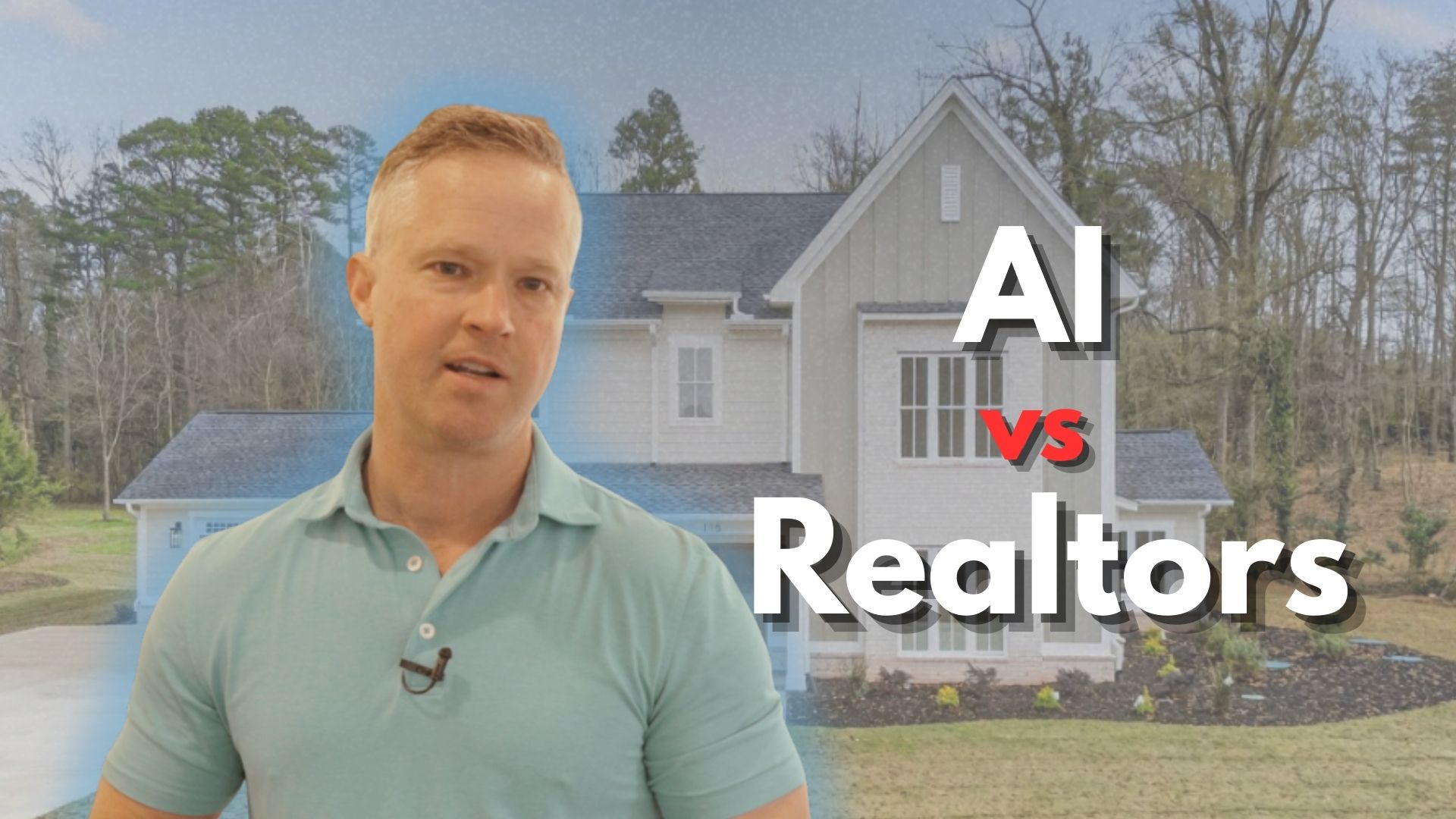
🤖🏡 AI vs. Realtors in Greenville, SC, What AI Can’t Do When It Matters
Is AI replacing realtors? That’s the question everybody’s asking, and I hear it all the time in Greenville and across the Upstate.
Here’s the truth that gets missed in most conversations, AI can replace specific tasks, but it can’t replace accountability. And in real estate, accountability is what protects your money, your timeline, and your peace of mind.
I’m Chris Horrell, a Realtor born and raised here in Greenville. My team and I would be honored to be your trusted resource, using a blend of modern AI tools and real-world, boots-on-the-ground expertise.
Quick takeaway: Use AI for speed and early research. Use a great Realtor for verification, negotiation, strategy, and risk management.
❓🤖 Is AI replacing realtors, or just replacing certain tasks?
AI is replacing tasks, not the entire job.
AI is fantastic at organizing public information, summarizing long documents, and giving you a quick overview. But a transaction is not a search result, it’s a chain of decisions and deadlines with real consequences.
What I see in real life is this, buyers and sellers who lean only on AI usually get stuck in one of these places:
- They trust public data that is incomplete or outdated
- They submit an offer that does not solve the seller’s actual problem
- They misread comps because they miss the local context
- They lose leverage by missing deadlines or paperwork details
AI can speed up your prep, but it can’t take responsibility when something goes sideways. That’s why I tell clients, AI is a tool, and a Realtor safeguards the outcome.
🗺️🤖 What can AI do well in a Greenville home search?
AI is a strong starting point for research and organization.
If you’re searching in Greenville, Lake Keowee, Lake Hartwell, or anywhere across the Upstate, AI can help you:
- Pull basic public property information fast
- Summarize neighborhood descriptions
- Create a shortlist of homes based on features
- Draft a list of questions to ask before touring
- Summarize inspection reports so they’re easier to read
And there’s nothing wrong with using it that way.
The problem starts when people confuse “fast” with “accurate.” Public info can be messy, and AI can only work with what it can access.
For example, AI tools often rely on publicly available data sources and general web pages. Even the National Association of Realtors has emphasized that tech tools can help clients, but usage needs to be compliant and responsible, especially when tied to listing data and MLS rules. According to the National Association of Realtors, AI can help clients, but it must comply with MLS policy and professional standards. https://www.nar.realtor/magazine/real-estate-news/technology/listing-app-on-ai-platform-can-help-clients-but-must-comply-with-mls-policy
🧾🔎 Why can’t AI guarantee the info it finds is correct (HOA, disclosures, details)?
Because AI can pull public info, but it can’t guarantee it’s the right info.
AI is awesome at speed. For example, it can pull tax records, old listings, neighborhood blurbs, and it can do it fast. But public data is not always accurate, current, or complete, and it’s definitely not legally binding.
I’ve literally seen public sites show “no HOA,” and then we verify and there is an HOA, sometimes even an assessment or restrictions the buyer didn’t expect.
That’s not trivia.
That’s your monthly payment, your rental rules, your ability to fence the yard, park a work truck, or rent out the property later.
So yes, using AI as a starting point is helpful, but a Realtor’s job is to verify through:
- MLS-level information
- Disclosures and documents tied to the current listing
- Direct confirmation from the listing agent
- Direct confirmation from the HOA or management company when needed
AI can summarize what it finds. Even so, it can’t guarantee the inputs are correct.
🏢⚠️ What’s the fastest way AI gets buyers into trouble with HOA info in the Upstate?
HOA information online can be outdated the day you read it.
AI can find public HOA fees and amenities, and it might even surface rules and regulations pages. But HOA databases are not updated in real time, and HOA changes can be quick.
Here are the big surprises I see buyers run into:
- Rental restrictions that changed recently
- Special assessments that were not obvious in public info
- Insurance requirements that affect what your lender needs
- What is actually included in dues, and what is not
Here’s the sneaky part, HOA management companies change regularly. That means the website, phone number, email, or fee schedule you found might be tied to the old company.
A Realtor verifies in real time with the listing agent and the current HOA contact so you don’t get burned later.
The U.S. Government Accountability Office has also noted that AI is changing housing processes, but it is not always better, especially when accuracy and consumer protections matter. https://www.gao.gov/blog/ai-changing-home-buying-and-renting-not-always-better
📝❌ Why do AI-written offers still get rejected in competitive Greenville markets?
Because the next piece is not just about information, it’s about humans.
Some people have attempted to make offers using AI. The offer might look fine on paper. It might even be technically correct.
But why do so many get rejected?
Because winning offers solve the seller’s problem. And the seller’s problem is rarely written clearly in the MLS.
Sure, AI can draft an offer. It can suggest terms, too. However, it still can’t do the most important things in real estate:
- Read the temperature of the deal
- Understand the seller’s priorities through conversation
- Adjust terms in real time based on what the listing side is actually signaling
The winning offer is not always the highest price.
In Greenville and the Upstate, the winning offer is often the one that fits the seller’s situation and benefits them best.
📞🏆 What phone call does AI can’t make that often wins the deal?
The phone call that AI can’t make is the one that wins deals.
If your offer keeps getting rejected, it’s usually not because you didn’t write it correctly.
It’s typically because you didn’t solve the seller’s problem.
For starters, AI can’t pick up the phone and talk to the listing agent. Just as importantly, it can’t build rapport, listen for hesitation, or catch the small cues that tell you what the seller truly needs.
That human-to-human negotiation is where a lot of deals are won.
✅🧩 What should you ask a listing agent to structure a winning offer?
When I call a listing agent, I’m typically asking three things:
- What does the seller need most, timing or certainty?
- What are they most worried about, repairs or appraisal risk?
- What would make them say yes today?
Those three questions help you structure an offer that works for both sides.
This is where people get tripped up, because they focus only on price and miss the real motivators.
If you want a simple framework, think:
- Certainty: clean terms, strong lender, clean deadlines, fewer unknowns
- Timing: closing date that fits the seller’s move, rent-back if needed
- Risk: appraisal strategy, inspection approach, clear communication
📊🏡 Are comps “just numbers,” or why Greenville comps require context?
Comps are not just numbers, they’re stories.
AI can give you numbers. Realtors explain why.
I get asked regularly, “Why isn’t this one selling when there’s an identical one right down the street that did?”
And the answer is usually not found in a quick public comparable list.
Most of the time, it’s one of three buckets:
1) Location nuance that the internet won’t feel
- School zone differences
- HOA rules or restrictions
- A different pocket of the neighborhood
2) Property reality that photos hide
- Road noise
- Privacy issues
- Backyard feel
- Street traffic
3) Presentation and execution
- Condition and updates
- Photos and marketing
- Showing access
- Pricing strategy
Especially here in the Upstate, two miles can be a different market.
🧠📈 Public comps vs MLS-level comps, what’s the real difference?
Public comps can be a helpful starting point. MLS-level comps are what you use to make real decisions.
AI can pull public comparables, but public comps often miss:
- The true condition of the home
- Seller concessions
- Showing traffic and agent notes
- Financing-related details
- The story behind why it sold fast or sat
MLS-level data can include agent remarks, accurate property details, and better context for why one sale is actually comparable and another is not.
That’s why we don’t just “pull comps.” We interpret them.
📍🏘️ Why can two miles be a different market in Greenville and the Upstate?
Because neighborhood lines are not always obvious online.
In Greenville, Lake Keowee, Lake Hartwell, and the surrounding Upstate areas, micro-markets matter. A small change in:
- School assignment
- HOA rules
- Road access
- Lake access and community amenities
- Lot orientation and privacy
…can change buyer demand fast.
AI can summarize broad areas. A local agent can tell you what actually moves the needle for buyers and sellers on specific streets.
🧰🏦 How do inspections impact financing, insurance, and timelines, beyond the summary?
An inspection is not just “what’s wrong.” It can decide whether your loan closes on time, whether insurance gets messy, and what you should negotiate as leverage.
It’s great that AI can summarize an inspection report and make it easier to read.
But AI cannot guide you through what matters most to you and your financing because the same inspection item can be:
- a non-issue for one buyer
- a deal-breaker for another
It depends on:
- loan type
- reserves
- timeline
- risk tolerance
A Realtor helps you decide:
- repair request vs credit
- urgent vs cosmetic
- what could impact underwriting, insurance, and appraisal
- how to negotiate without blowing up the deal
🧩⏰ What are the “invisible steps” that keep a transaction from exploding?
Most people think real estate is three steps, you find a house, sign a contract, and close.
But the truth is there are dozens of moving parts, and a missing one can cost you time, money, or the entire deal.
Here are five invisible steps that can blow up a deal if you miss them:
- Deadlines
First, if you miss one, you lose leverage and protections. - Documents and disclosures
Next, one missing form can delay everything, including closing. - Inspections and scheduling, plus response strategy
Then, timing matters as much as the repair. - Appraisal coordination
After that, a low appraisal is not rare, but having a plan matters. - Repair negotiation and the addendum
Finally, if the paperwork isn’t right, the deal isn’t real.
AI can help summarize and organize. It cannot manage the chain reaction with real people, real deadlines, and real consequences.
✅🤖 Where AI helps buyers the most (and where you still must verify)?
In practice, AI helps the most when it speeds up your early research and makes information easier to digest.
Here are smart ways to use AI:
- Build a list of questions to ask during tours
- Compare neighborhood commute times and amenities using official sources
- Summarize long PDFs like inspection reports
- Organize your home search criteria and priorities
And here’s where you should always verify:
- HOA rules and fees
- Disclosures
- Material facts tied to the current listing
- Anything that affects monthly payment, lending, insurance, or use of the property
As a Realtor, I also have to follow fair housing laws. I cannot steer you by saying what areas are “safe” or “unsafe.” AI can help you find public sources faster, but AI also carries a “verify the facts” disclaimer.
So my recommendation is simple, use AI to find the official sources, then confirm directly with the official source.
Image Suggestion: A “Use AI for this” vs “Verify this” two-column graphic.
Alt Text: “Graphic listing what to use AI for and what to verify in a Greenville home purchase.”
🛡️✅ So what’s the catch, what AI can’t replace is accountability
Remember the question from the beginning?
What’s the catch with AI replacing realtors?
The catch is this, AI replaces specific tasks, not accountability.
AI is a powerful tool. As a result, it can help you research, compare, and prepare.
However, it can’t advocate for you.
Likewise, it cannot manage risk.
Most importantly, it cannot navigate the human side of the transaction when both your money and your future are on the line.
AI can assist the process. Realtors safeguard the outcome, with connections, reputations, track records, and the experience to keep a deal from exploding.
Industry commentary has also framed it this way, AI is unlikely to replace agents outright, but it may separate those who adapt from those who do not. https://chicagoagentmagazine.com/2026/03/02/artificial-intelligence-will-not-replace-real-estate-agents-it-will-divide-them/
✅🏡 Conclusion
At some point you’re going to buy or sell a home.
If that happens here in Greenville, Lake Keowee, Lake Hartwell, or anywhere in the Upstate, my team and I would be honored to be your trusted resource.
If you want to use AI wisely, avoid expensive surprises, and put together a strategy that actually wins, reach out.
My contact information is below. Share your thoughts in the comments, and I’ll see you on the next one.
❓ FAQ
🤖🏡 Can I buy a house without a realtor using AI?
Yes, some buyers try it, and AI can help you research and draft documents. But buying without representation can increase your risk because you still have to verify facts, manage deadlines, negotiate repairs, and coordinate the moving parts. If you go that route, be prepared to do the accountability work yourself, or hire professional support where needed. For examples of how some buyers have experimented with AI tools in the process, see consumer reporting like this: https://www.businessinsider.com/homebuyer-used-ai-tool-to-buy-home-2025-11
📝✅ Can AI write a real estate offer that gets accepted?
AI can draft an offer, and it can suggest terms, but acceptance is driven by what the seller needs. The details that win deals are often discovered through real conversations with the listing agent, not by reading the MLS alone. A great offer solves timing, certainty, and risk, and it is positioned with the right communication.
🏢⚠️ Is HOA information online accurate and up to date?
Sometimes, but you should assume it can be outdated. HOA fees, rental restrictions, special assessments, and insurance requirements can change, and management companies can change too. The safest approach is to use AI to find the official sources, then verify directly through the listing agent and the current HOA contact.
📊🏘️ What’s the difference between Zillow-style comps and MLS comps?
Public comps are a starting point, but they often miss important context like condition, concessions, and why the home sold quickly or sat. MLS-level comps can provide better detail and more accurate comparisons, which helps you price correctly or make a smarter offer. In Greenville and the Upstate, that context matters because micro-markets can shift from one pocket to the next.
🤖📈 Will AI change real estate agents’ jobs in the next few years?
Yes, it already is. The agents who use AI as a tool to improve communication, organization, and client experience will likely stand out. But most signs point to AI changing tasks and workflows more than replacing the role entirely. One industry viewpoint frames it as AI dividing agents by adaptability rather than replacing them outright. https://chicagoagentmagazine.com/2026/03/02/artificial-intelligence-will-not-replace-real-estate-agents-it-will-divide-them/
📚 Final citation list
- https://www.nar.realtor/magazine/real-estate-news/technology/listing-app-on-ai-platform-can-help-clients-but-must-comply-with-mls-policy
- https://www.gao.gov/blog/ai-changing-home-buying-and-renting-not-always-better
- https://chicagoagentmagazine.com/2026/03/02/artificial-intelligence-will-not-replace-real-estate-agents-it-will-divide-them/
- https://www.businessinsider.com/homebuyer-used-ai-tool-to-buy-home-2025-11
🔗 Stay Connected With Me
Don’t just read about the Upstate—see it, live it, and explore it with me across social media!
📞 Call/Text me at 864-351-8239
👉 Like & Follow for more: